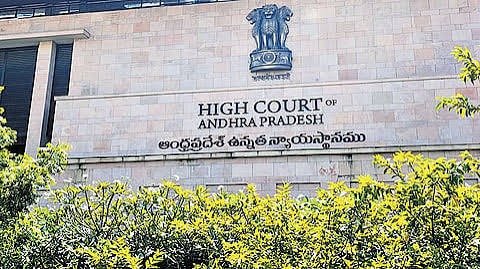
Andhra Pradesh High Court Says MPDOs Must Implement MPP Resolutions
The Andhra Pradesh High Court has ruled that a Mandal Parishad Development Officer (MPDO) cannot refuse to implement resolutions passed by a Mandal Praja Parishad (MPP) unless the resolutions have been cancelled or suspended by the state government under the applicable law.
The judgment highlights the responsibilities of government officials in implementing decisions made by local self-government institutions.
What Did the Andhra Pradesh High Court Rule?
According to a report published by The New Indian Express on October 11, 2026, the court directed an MPDO to implement resolutions passed by the Vizianagaram Mandal Praja Parishad at a meeting held on June 5, 2026.
Justice B. S. Bhanumathi delivered the judgment in a case concerning the non-implementation of those resolutions.
The court referred to Section 246 of the Andhra Pradesh Panchayat Raj Act, which provides a legal mechanism for the government to cancel or suspend certain resolutions passed by local bodies.
The ruling makes clear that an official cannot simply decline to implement a resolution without considering the applicable legal provisions.
Court Clarifies Rules on Objections to Resolutions
The High Court also addressed how members of a Mandal Praja Parishad should register their objections to decisions taken during meetings.
Under Rule 16(6), members seeking to record their dissent must do so during the meeting or immediately after it concludes. The court observed that objections submitted later could not be treated as valid objections under the rule in the case before it.
The court further clarified that the president of a Mandal Praja Parishad may raise and discuss matters even when they are not included in the original meeting agenda, as provided under Section 5 of the Act.
Therefore, a resolution cannot be challenged solely because the subject was not listed on the agenda.
What Did the Court Say About Development Funds?
The judgment also addressed the allocation and use of development funds among villages within a Mandal Parishad.
The court observed that there is no statutory requirement to distribute development funds equally among every village under a Mandal Parishad.
However, the funds must be used for the purposes for which they were sanctioned. This means that the use of public funds must remain consistent with their approved objectives.
The court also referred to an earlier case involving Armur Gram Panchayat and the Government of Andhra Pradesh while discussing the role of Panchayat Raj institutions as units of local self-government.
Why Is This Judgment Important?
Mandal Praja Parishads play a role in local administration and rural development. Their resolutions can relate to matters affecting villages and local communities.
The ruling clarifies the relationship between elected local institutions and the officials responsible for carrying out their decisions. It also explains that objections to resolutions must follow the procedures prescribed by law.
For residents, local representatives and public officials, the judgment provides an important clarification about the implementation of decisions made by local governing bodies.
Conclusion
The Andhra Pradesh High Court’s ruling reinforces the legal responsibilities of Mandal Parishad Development Officers in implementing resolutions passed by Mandal Praja Parishads.
The judgment also clarifies the procedures for recording objections and the rules governing development funds. Its application will depend on the relevant statutory provisions and the circumstances of individual cases.