Delhi AQI Today – Air Quality Enters Severe Category After Diwali Celebrations
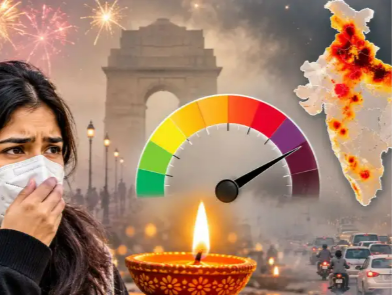
Delhi’s air quality deteriorated sharply after Diwali celebrations, with several parts of the national capital recording air quality levels in the severe category on November 9, 2026.
The rise in pollution has renewed concerns about public health and environmental conditions across Delhi-NCR.
According to reporting by The Indian Express, Central Pollution Control Board (CPCB) monitoring stations recorded AQI levels above 430 in locations including Jahangirpuri, Anand Vihar and Mundka.
Why Has Delhi’s Air Quality Deteriorated?
Several factors can contribute to poor air quality during the post-Diwali period.
1. Firecracker Emissions
Firecrackers release particulate matter and other pollutants into the atmosphere. Large-scale celebrations can increase pollution levels over a short period.
2. Weather Conditions
Calm winds and unfavourable atmospheric conditions can prevent pollutants from dispersing quickly.
3. Vehicle Emissions
Traffic-related pollution also contributes to the city’s overall air quality problem.
4. Construction and Road Dust
Dust from construction sites and roads can add to particulate pollution.
What Does Severe AQI Mean?
The Air Quality Index (AQI) communicates the level of air pollution through a numerical scale.
India’s AQI categories include:
- Good: 0–50
- Satisfactory: 51–100
- Moderate: 101–200
- Poor: 201–300
- Very Poor: 301–400
- Severe: 401–500
The severe category indicates extremely poor air quality and a higher risk of health impacts.
Precautions During High Pollution Levels
Residents can consider the following precautions:
- Reduce prolonged outdoor physical activity.
- Follow official air quality advisories.
- Keep indoor spaces as clean as possible.
- Use a well-fitted particulate-filtering mask when outdoor exposure is unavoidable.
- Seek medical advice if breathing difficulties or other concerning symptoms develop.
People with existing respiratory or heart conditions should follow their healthcare professional’s advice.
Conclusion
Delhi’s post-Diwali pollution highlights the importance of long-term air quality management. Reducing emissions, controlling dust and following environmental regulations are essential for improving urban air quality.